THE FIBROMATES JOURNAL

How to Plan for the Holidays Without Overwhelm

by Irene Roth, Blog Editor/Writer

The holidays are meant to be a time of joy, connection, and reflection — yet for many of us, they can easily turn into a whirlwind of stress. Between shopping, decorating, hosting, and attending events, it’s easy to feel like there’s too much to do and not enough time or energy to do it. For those living with chronic illness or simply managing busy lives, the holidays can feel more like a marathon than a celebration. But it doesn’t have to be that way. With a thoughtful, intentional approach, you can plan for the holidays without overwhelm — and even enjoy them.

1. Start Early and Simplify

One of the biggest sources of holiday stress is last-minute planning. When everything piles up in December, it’s natural to feel anxious and exhausted. Start early — even small steps make a big difference. Begin by making a list of what truly needs to get done and what can be simplified or let go. Ask yourself: Do I really need to bake five different desserts? Do I need to attend every event?

Simplifying doesn’t mean you’re doing less; it means you’re focusing on what matters most. Choose traditions that bring you joy and meaning, and release the rest. Maybe it’s one cozy gathering instead of several parties, or a simple home-cooked meal instead of an elaborate spread. Remember: peace is far more memorable than perfection.

2. Set Boundaries Early

The holidays often bring added social and family expectations. Learning to say no — kindly and firmly — is one of the greatest gifts you can give yourself. Before the season ramps up, decide what your limits are. How many social events can you realistically handle? How much can you comfortably spend or cook?

Communicate your boundaries clearly and early. For example: “I’d love to see everyone, but I can only host a small lunch this year,” or “We’re keeping gifts simple this time.” Most people will respect your honesty — and those who don’t may need a gentle reminder that your well-being matters, too. Setting boundaries allows you to be fully present for the things you do say yes to, instead of spreading yourself too thin.

3. Delegate and Share the Load

You don’t have to do everything yourself. The holidays are about connection, not martyrdom. Delegate tasks and involve others — especially family members or friends who enjoy helping. Create a shared to-do list or assign specific responsibilities: one person can handle decorations, another can plan games, and someone else can manage the food.

If you’re hosting, ask guests to bring a dish or contribute in a small way. People often want to help but just need direction. Letting others pitch in not only reduces your stress, but also deepens the sense of community and shared joy.

4. Keep Your Body and Mind in Balance

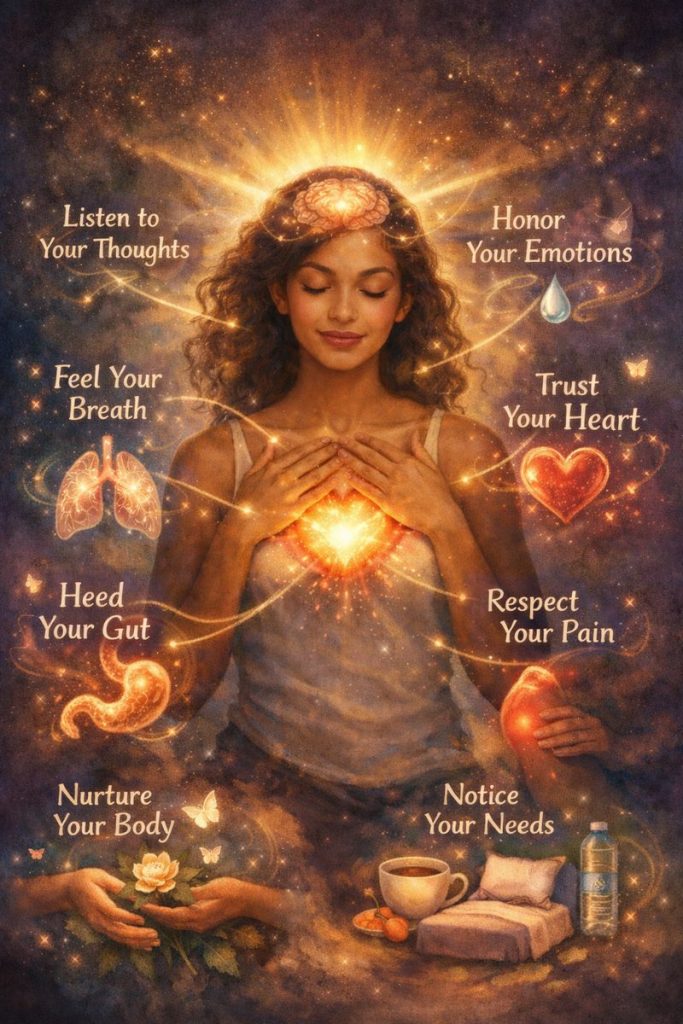
Amid the bustle, it’s easy to forget your own needs. Yet, your well-being is the foundation for a peaceful holiday. Prioritize rest, hydration, and nutrition — even when things get busy. Schedule breaks into your days, especially if you live with chronic pain or fatigue.

Mindful moments — such as a short walk, deep breathing, or journaling about gratitude — can help regulate your nervous system and keep you grounded. Don’t underestimate the power of saying, “I need a few quiet minutes.” A calm mind makes for a calmer season.

5. Focus on Presence, Not Perfection

The heart of the holidays isn’t in how perfect the tree looks or how many gifts are under it. It’s in the laughter shared over a meal, the quiet glow of candles, the warmth of connection. When you let go of perfection, you make room for peace and joy.

If something doesn’t go as planned — a burnt pie, a delayed shipment, or a canceled gathering — breathe and remind yourself that these moments don’t define the season. What people will remember most is how they felt, not how everything looked.

A Season of Calm and Joy

Holiday planning doesn’t have to drain your energy or steal your peace. By starting early, simplifying, setting clear boundaries, and nurturing your well-being, you can experience the season in a way that aligns with your true values.

This year, choose calm over chaos and presence over perfection. The holidays are not about doing it all — they’re about cherishing what matters most. When you give yourself the grace to slow down and savor the moments, you’ll find that peace is the most beautiful gift of all.

Becoming Through Fibro

by Irene Roth, Blog Editor/Writer

This is a Haiku poem that I wrote while the ladies in my group wrote in my writing program on October 25th, 2025. Everyone in the group loved it. So, I thought I would share it here with the greater FSN Community.

Once I ran with wind
Through fields of unbroken dreams—
The body obeyed.

Morning was easy,
Like breath before the first sigh—
I was infinite.

Then came the whisper,
A flicker beneath my skin,
Lightning without rain.

Bones became anchors,
Muscles turned to molten stone,
Fatigue wrapped my soul.

Friends spoke of my glow
Fading like a late sunset—
They could not see pain.

Doctor after room,
Labels fell like autumn leaves—
None could name the storm.

I learned the language
Of aching and surrender,
Syllables of rest.

Days slowed into dust,
A clock with no urgency,
Time lost all its edge.

Identity cracked—
Who was I without my fire?
Who beneath the mask?

I mourned the woman
Who once danced through deadlines’ dust,
The “old me” vanished.

Yet in quiet hours,
I heard a gentler heartbeat—
One that matched my pace.

The world moved too fast,
But I found a softer sky
Inside stillness’ arms.

I became fluent
In small mercies and moonlight—
The art of pacing.

My worth once measured
In doing, producing, proof—
Now, in simply being.

The mirror offered
A face lined with tenderness,
Not defeat—but grace.

I learned to listen
To whispers of weary bones—
They are my teachers.

Each flare a lantern,
Revealing the sacred now—
Pain as slow wisdom.

I stitched new meaning
From broken threads of my days,
A tapestry whole.

Fibro did not steal;
It remade the architecture
Of my belonging.

Now I live gently,
A pilgrim in my own skin—
Unhurried, aware.

I breathe differently—
Less as conquest, more as prayer,
Each inhale a gift.

In stillness, I bloom,
No longer who I once was,
But something deeper.

Beneath all the ache,
A self reborn in silence—
Light through fragile glass.

The storm still visits,
But I have learned its music,
And I hum along.

Soft morning rises,
And I greet it with open hands—
Alive, enough, whole.

My Fibromyalgia Journey by Jade Bald Guest Blogger

It all began in 2015, at about age 24. A lot was going on in my life. My grandmother passed of old age two years before. I had relocated later in the year before. 

I was unemployed, but taking courses online. I was also trying to publish a book. I didn’t have many friends either, as who could relate to being chronically ill? I don’t know a lot of younger people in my life. 

In 2017, I tried renting in another location, but that didn’t go well. It lasted five months. The landlord was mentally ill, a gambling fiend who was running from mega credit card debt and was using her tenants as pawns in her addiction. The other tenants put stale bread at my front door and harassed me. 

I was only 26 years old at the time and it didn’t help with symptom management. Dealing with it all was stressful. I moved back in with my mother. Then we figured out something, and by late 2018, we lived separately again. 

During that time, I began to learn about myself, about my physiology, and inner core. I learned that I was a highly sensitive personality (HSP).  Suddenly, everything started to make sense-my past and current poor health. I began to write for several blogs, sharing my story and some research on chronic illness and high sensitivity. 

I wasn’t paid for any of it, but it gave me purpose. It allowed me to build a writing portfolio, credited with over twenty blog posts, and over forty guest posts. I’ve contributed to several chronic health blogs people in the FSN community may know: Counting my Spoons, Despite Pain, Positivity in Pain, The Disabled Diva, Painfully Living, My Medical Musings, The Disabled Diva, and many other non-health blogs. All are available online to read by members and caregivers.

I’ve had a myriad of negative, adverse experiences growing up which resulted in my never feeling connected or safe. I then realised my mother likely had mental health issues as well. It’s no surprise, as she’s an adult child of an alcoholic. 

I’ve tried therapy online six times in the past two years, but it hasn’t helped. I didn’t resonate with any of the counsellors, which is common being an HSP. Many, many of us are mis-attuned as children, and then when there’s a mismatch with therapists, we’re unconsciously sent back to our childhood of feeling misunderstood, unseen-and unloved. Not to mention, the process is pricey. 

I’ve relocated once again two years ago, and don’t enjoy the situation but it has, once again, been something I can’t control. 

In terms of simple fixes, I’ve been trying to eat healthier, get better sleep, and find connections in online communities. Also, when I’m able to, I keep writing for blogs or work on my book or screenplay. It’s frustrating to feel as I do, because I’m so young. But this is life. Sometimes you can’t control some aspects, but others you can. 

Jade Bald is a freelance writer, as well as author and screenwriter in progress. She lives in a town in Ontario. When not writing, she is listening to music, and watching the latest series on Amazon Prime Video.