
Energy Pacing and Spoon Theory in Action: A Guide for Fibro Warriors

by Irene Roth, Blog Editor/Writer

Living with chronic illness, like fibromyalgia or other invisible conditions, often feels like walking a tightrope between what you want to do and what your body can actually handle. For many, the concept of energy pacing becomes essential. It’s a way to honor your limits while still living a fulfilling life. At the heart of this approach is the Spoon Theory, a metaphor that has helped countless individuals visualize their energy reserves and plan their days thoughtfully.

Spoon Theory was coined by Christine Miserandino, who used spoons to describe the finite energy people with chronic illnesses have each day. In this analogy, healthy individuals might have a seemingly endless supply of “spoons” — the units of energy needed to complete daily tasks. For someone with a chronic illness, spoons are limited. Every activity, from showering to grocery shopping, costs a spoon. Once your spoons are gone, exhaustion or symptom flare-ups can occur.
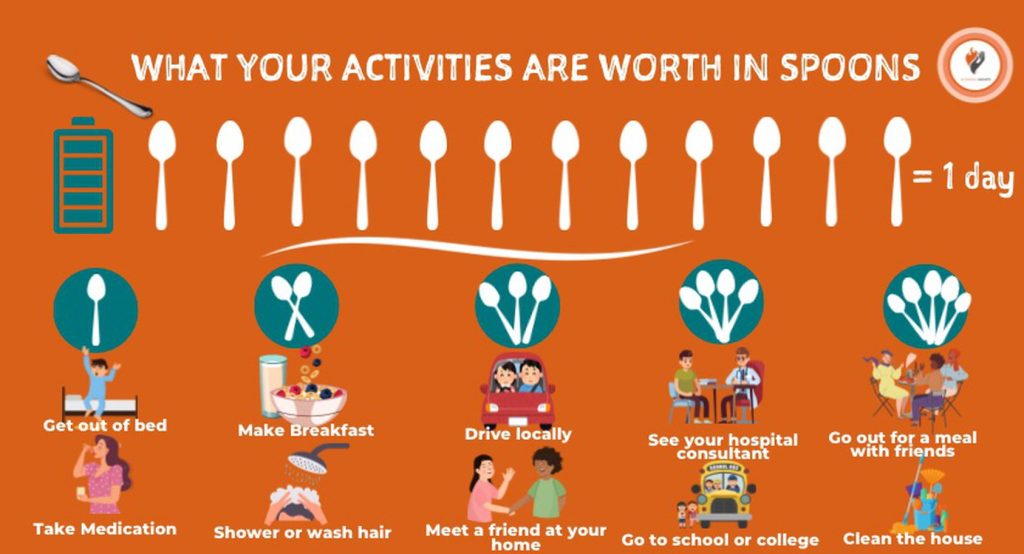
The beauty of Spoon Theory lies in its simplicity. It helps friends, family, and coworkers understand that fatigue is not laziness or avoidance; it’s a matter of managing limited resources wisely.

Energy pacing is the strategy of allocating your limited spoons throughout the day to prevent overexertion and setbacks. It’s about working with your body rather than against it. Here’s how it looks in action:

Each morning, take a moment to mentally inventory your energy. How many spoons do you have today? This can change depending on sleep quality, stress, weather, or symptoms. Being mindful of your baseline allows for realistic planning.

Not all tasks carry equal importance. Identify which activities are non-negotiable and which can wait. For instance, attending a medical appointment might take priority over organizing your closet. Use your spoons where they matter most.

Here are a few ways to do this:

Break Tasks Into Manageable Steps

Instead of tackling a big task in one go, break it down into smaller steps. Doing dishes, for example, might be divided into washing, drying, and putting items away across the day. Small increments help avoid burning through your spoons too quickly.

Build in Rest Periods

Pacing isn’t just about conserving energy for tasks; it’s also about scheduling rest proactively. Naps, quiet time, or short walks can replenish energy levels and prevent the dreaded crash that comes from pushing too hard.

Track and Adjust

Keeping a journal or digital tracker can help you notice patterns. Which activities drain you the most? Are there times of day when you have more energy? This feedback is invaluable for fine-tuning your pacing strategy.

Here’s an example to bring the points in focus from this blog.

Imagine a fibro warrior named Sara. She wakes up with six spoons. Showering costs one spoon, preparing breakfast two spoons, and a short walk three spoons. Without pacing, she might try to clean the house after her walk, quickly running out of energy and triggering a flare-up. Instead, Sara might choose to do light tidying in 10-minute increments across several days, preserving spoons for activities that bring her joy, like reading or spending time with family.

Energy pacing and Spoon Theory aren’t just physical tools—they’re empowering. They give control back to those living with chronic illness, validating limits while encouraging intentional, meaningful activity. By accepting that energy is a precious, finite resource, you can reduce guilt and frustration, focusing instead on what truly matters.

Living with limited energy can be challenging, but Spoon Theory and energy pacing transform how we navigate daily life. By consciously managing spoons and strategically planning activities, fibro warriors can protect their well-being, avoid crashes, and still enjoy life’s simple pleasures. The goal isn’t to do everything; it’s to do what matters most, with balance and self-compassion.


Writing Through Chronic Pain and Fatigue: How It Can Ease Stress

by Irene Roth, Blog Editor/Writer

Living with chronic pain and fatigue can feel like carrying an invisible weight each day. For those with conditions such as fibromyalgia, arthritis, chronic fatigue syndrome, or other long-term illnesses, the challenges extend beyond physical discomfort.

Emotional stress, frustration, and feelings of isolation often accompany the physical toll, creating a cycle that makes symptoms harder to manage. One accessible and healing tool that many overlook is writing. Whether through journaling, expressive writing, or creative storytelling, putting words on paper can help ease stress, provide clarity, and even promote a sense of control.

Here are a few ways that writing through chronic pain and fatigue can help ease stress for fibromates.

First, writing can be viewed as an emotional release. Chronic pain is not just physical—it carries a significant emotional burden. When pain or fatigue limits daily life, emotions like anger, sadness, or resentment may build up. Suppressing these feelings often leads to more stress and tension, which can worsen symptoms. Writing provides a safe outlet to release pent-up emotions.

By journaling freely—without worrying about grammar, spelling, or structure—individuals can give their feelings a voice. This process can be cathartic, allowing stress to flow out of the body and onto the page instead of festering internally.

Second, writing can help us create mental space for ourselves. Pain and fatigue can crowd the mind with constant worries: Will today be manageable? What if I can’t complete what I planned? Writing helps clear that mental clutter. By capturing thoughts in a journal or notebook, people can step back and see their worries from a distance. This act of externalizing thoughts reduces rumination and provides perspective. It can also help identify recurring stress triggers or negative patterns that otherwise go unnoticed. Writing, in this way, becomes a form of self-coaching, giving clarity and reducing the mental load of constant worry.

Third, we can build resilience through storytelling. Narrative writing, such as telling one’s personal story of living with chronic illness, can also foster resilience. Framing struggles as part of a larger life journey helps individuals recognize their own strength and courage. It turns experiences of suffering into meaningful stories, shifting focus from limitations to resilience. This not only eases stress but also helps cultivate hope, an essential component of emotional well-being when navigating chronic health challenges.

Fourth, the act of writing can also create a sense of calm in the body. Thus, there is a mind-body connection to writing. Research in expressive writing suggests that journaling about emotions can lower blood pressure, improve immune function, and reduce stress-related symptoms. Writing slows down racing thoughts, allowing the nervous system to shift from a state of constant alertness to one of relaxation. Even just ten to fifteen minutes of writing a day can create a noticeable difference in stress levels.

Writing for stress relief doesn’t need to be time-consuming or overwhelming. Here are some simple ways to get started:

  • Gratitude Journaling: List three small things you are grateful for each day.
  • Stream of Consciousness Writing: Set a timer for ten minutes and write whatever comes to mind.
  • Prompt-Based Journaling: Use questions such as, What is one challenge I faced today and how did I respond?
  • Creative Writing: Try poetry, short stories, or letters—even fictionalizing pain can provide release.

Writing through chronic pain and fatigue offers more than a distraction—it is a pathway to healing and stress relief. By transforming our internal chaos into words, we can reclaim a sense of control, build emotional resilience, and soothe both body and mind. While writing won’t eliminate pain, it can lighten our emotional burden that makes pain harder to bear, providing a gentle yet powerful form of relief.

Writing can also become an elixir for us living with fibromyalgia. I know it is for me. It is one of the most important parts of my self-management toolkit.

Book Review: Joyspan: The Art and Science of Thriving in Life’s Second Half by Dr. Kerry Burnight

by Irene Roth, Blog Editor/Writer

Joyspan by Dr. Kerry Burnight offers a refreshing and transformative perspective on aging, reframing the later years of life not as a period of decline but as a stage rich with possibility, growth, and meaning. Drawing on decades of experience as a gerontologist, educator, and author, Dr. Burnight introduces the concept of “joyspan”—a holistic approach to living fully that emphasizes emotional, mental, and social well-being alongside physical health.

The central premise of the book is both simple and profound: life’s later years can be some of the most rewarding if approached with intention, resilience, and purpose. Dr. Burnight breaks down joyspan into practical components, such as cultivating connection, embracing personal growth, seeking meaning, and exercising choice and agency in everyday life. Each chapter blends research, real-life examples, and actionable strategies, making the book both intellectually engaging and immediately applicable.

One of the standout elements of Joyspan is its deeply human perspective. Dr. Burnight often draws on her personal experiences, including insights from her 95-year-old mother, Betty, to illustrate that thriving is less about circumstances and more about mindset and habits. This approach challenges the fear-driven narratives commonly associated with aging and encourages readers to see their later years as an opportunity for intentional living rather than resignation.

The book is also highly practical. Dr. Burnight addresses common challenges such as caregiving, financial uncertainty, health changes, isolation, and cognitive decline. Each topic is paired with strategies for navigating these obstacles while maintaining joy and purpose. Importantly, she emphasizes emotional resilience as a skill that can be cultivated, rather than a trait people either have or don’t have. This focus empowers readers to take concrete steps toward a fulfilling life, regardless of external limitations.

While Joyspan is particularly relevant for those in midlife and beyond, its insights transcend age. Anyone seeking a richer, more meaningful life can benefit from Dr. Burnight’s wisdom, especially individuals navigating personal or health challenges. The principles of connection, adaptability, purpose, and intentionality are universal tools for enhancing quality of life, making the book applicable to a wide audience.

In summary, Joyspan is more than a guide to aging gracefully—it is an invitation to embrace life with clarity, resilience, and joy. Dr. Burnight’s compassionate voice, evidence-based approach, and practical guidance make the book a valuable resource for readers seeking not just to live longer, but to live better. It inspires reflection, encourages proactive change, and reminds us that thriving is possible at any stage of life. For anyone looking to cultivate a life rich in meaning, connection, and happiness, Joyspan is an essential read for all fibro warriors.