THE FIBROMATES JOURNAL

Redefining Independence When You Live with Fibromyalgia

by Irene Roth/Blog Editor

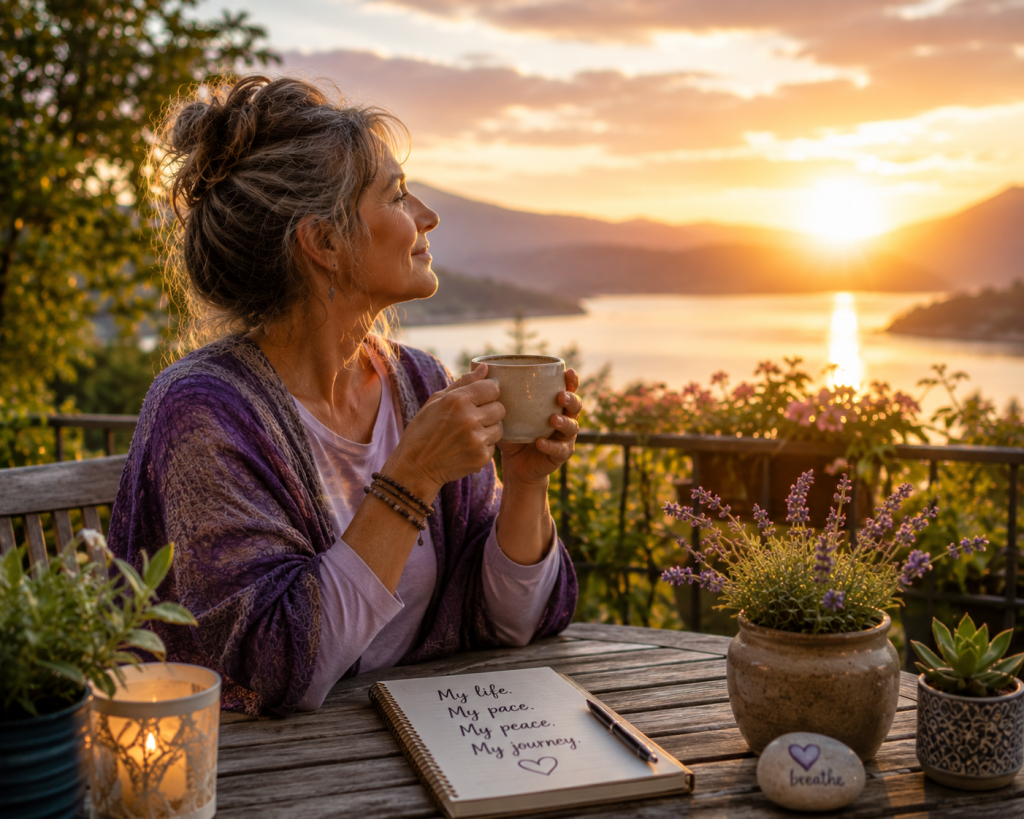
When most people think about independence, they often picture someone who can do everything on their own. They imagine strength as self-sufficiency, productivity, and the ability to push through challenges without needing help. But when you live with fibromyalgia, independence often looks very different.

For fibromates, independence is not about doing everything. It is about making choices that honour your body, your energy, and your well-being. It is about learning that asking for help does not diminish your strength—it supports it.

Living with fibromyalgia requires constant decision-making. Every day begins with an assessment of how your body feels. You may wake up with enough energy to accomplish several tasks, or you may wake in the middle of a pain flare that changes every plan you had made. This unpredictability can make the traditional definition of independence feel frustrating or even unattainable.

But perhaps the definition itself needs to change.

True independence is having the freedom to listen to your body without guilt. It is deciding to rest when your body needs rest instead of forcing yourself to meet someone else’s expectations. It is recognizing that pacing is not giving up—it is a wise strategy that allows you to participate in life more consistently.

Independence also means becoming your own best advocate. Many people with fibromyalgia spend years explaining invisible symptoms to family members, employers, healthcare providers, and even friends. Learning to speak honestly about your needs takes courage. Saying, “I need to leave early,” “I can’t do that today,” or “I need a quieter environment” are acts of self-respect, not weakness.

There is also tremendous independence in learning what works uniquely for you. Perhaps you use assistive devices without embarrassment. Maybe you schedule appointments during your best hours of the day, prepare meals in stages, or divide household chores into smaller tasks. These adaptations are not signs that you are less capable. They are examples of creative problem-solving and resilience.

Many fibromates discover that independence also includes accepting support. Allowing a loved one to carry groceries, asking a neighbour for assistance, or using grocery delivery services does not mean you have failed. It means you are conserving precious energy for the activities that matter most to you. Sometimes the strongest decision is knowing when not to spend your limited energy.

Emotional independence is equally important. Fibromyalgia can invite comparisons with healthier versions of ourselves or with others whose lives appear easier. Over time, many people learn to release those comparisons. Instead of measuring success by how much they accomplish, they begin measuring it by how well they care for themselves, maintain meaningful relationships, and preserve their quality of life.

One of the greatest gifts of living with fibromyalgia is that it often teaches priorities with remarkable clarity. You learn that your energy is valuable. You become intentional about where you invest it. You begin choosing people, activities, and commitments that nourish rather than drain you.

Perhaps independence is not about never needing anyone.

Perhaps it is about having the wisdom to know what your body needs, the courage to honour those needs, and the confidence to build a life that reflects your values instead of society’s expectations.

For fibromates, independence is not measured by how much you can do alone. It is measured by how faithfully you care for yourself while continuing to create a meaningful, joyful life—one thoughtful choice at a time.

Welcome to July

By Irene Roth/Blog Editor

Welcome to July, friends!

As we step into a new month, I invite you to pause and reflect on a simple but powerful question: What does independence really mean?

For many of us, we grew up believing that independence meant doing everything ourselves. It meant never asking for help, staying productive no matter how we felt, and measuring our worth by how much we accomplished. We learned that strength looked like self-reliance and that needing support somehow meant we were falling short.

Living with fibromyalgia gently—but firmly—invites us to rethink those beliefs.

This month, we will explore a different understanding of independence—one that is rooted not in doing more, but in living more intentionally. One that recognizes that true strength is not found in pushing through pain at all costs, but in making choices that honour your body, protect your energy, and nurture your well-being.

Redefining independence is not about giving up. It is about letting go of unrealistic expectations and embracing a life that reflects who you are today. It is about recognizing that asking for help, setting healthy boundaries, pacing your energy, and choosing rest are not signs of weakness—they are acts of wisdom and self-respect.

Throughout July, we’ll explore what it means to create a life that is truly your own. We’ll look at how independence can include accepting support without losing your sense of self. We’ll discover how standing in your power has little to do with physical ability and everything to do with self-awareness, courage, and resilience. We’ll also explore how to build an empowered, self-defined life that reflects your values instead of society’s expectations.

Fibromyalgia may place limits on your energy, but it does not limit your ability to live with purpose, kindness, creativity, or hope. While your path may look different than you once imagined, it can still be deeply meaningful and incredibly fulfilling.

Perhaps independence is less about carrying every burden alone and more about knowing which ones are truly yours to carry. Perhaps it is found in listening to your body instead of fighting it, in receiving help with gratitude instead of guilt, and in creating a life that fits your unique circumstances rather than trying to fit yourself into someone else’s definition of success.

As we journey through this month’s blogs, I hope you will discover that independence is not something fibromyalgia takes away. Instead, it becomes something richer, gentler, and more authentic. It becomes the freedom to live according to your own values, your own pace, and your own definition of a life well lived.

Thank you for being part of our Fibromates community. Whether this is your first visit or you’ve been walking alongside us for years, I hope you’ll find encouragement, practical ideas, and gentle reminders that you are stronger than you know.

Here’s to a July of growing confidence, self-compassion, and discovering that true independence is not about doing everything alone—it’s about creating a life that allows you to thrive in your own unique way.

Lessons from Nature: Flow, Rest, and Renewal

by Irene Roth/Blog Editor

Nature has much to teach us, especially those of us living with chronic illness. When we spend time observing the world around us, we begin to notice that nature does not operate according to constant productivity or endless striving. Instead, it moves through seasons of growth, rest, change, and renewal.

Perhaps there is wisdom in that for us, too.

Many of us have spent years pushing ourselves beyond our limits. We may have learned to value productivity above all else, measuring our worth by how much we accomplish in a day. Living with chronic illness often challenges those beliefs. Our bodies remind us that there are times to move forward and times to pause.

Nature understands this rhythm well.

Consider the changing seasons. Spring brings growth and possibility. Summer offers abundance and warmth. Autumn invites us to release what no longer serves us. Winter encourages stillness and restoration. None of these seasons is more important than another. Each has a purpose.

Yet how often do we resist our own seasons?

When fatigue arrives, we may criticize ourselves for needing rest. When pain limits our activities, we may compare ourselves to others or to who we once were. We may interpret our need for slower days as weakness rather than recognizing it as a natural response to what our bodies require.

Nature teaches us otherwise.

Flow is one of those lessons. Rivers do not force their way around obstacles. Instead, they move with flexibility and persistence, finding another path when one route becomes blocked. There may be times when our lives do not unfold according to our original plans. We may need to adjust expectations, modify routines, or discover new ways of engaging in meaningful activities.

This is not failure. It is adaptation.

Rest is another important teacher. Trees do not produce blossoms year-round. Animals seek shelter and conserve energy when necessary. The natural world honours periods of recovery. Rest is not an interruption of life; it is part of life.

Perhaps we can begin to view our own rest in the same way.

Renewal is the third lesson nature offers us. After long winters, tiny green shoots emerge from the soil. Birds return with their morning songs. Gardens bloom once again. Renewal does not always happen dramatically. Often, it unfolds quietly and gradually.

The same can be true for us.

Renewal may look like rediscovering a favourite hobby, reaching out to a friend, enjoying a peaceful moment on the patio, or finding a new way to care for ourselves. It may be the decision to approach ourselves with greater compassion rather than criticism.

Living with chronic illness can be challenging, but nature reminds us that life is not meant to be lived at one constant pace. There are seasons for activity and seasons for restoration. There are moments of movement and moments of stillness.

As you spend time outdoors this summer, pause and notice the lessons unfolding around you. Listen to the rustling leaves, watch the clouds drift overhead, and observe the resilience of the flowers that continue to bloom.

Nature is constantly changing, adapting, resting, and renewing itself.

Perhaps we can give ourselves permission to do the same.