Founded in November 2014, we are a community-based, volunteer-driven, self-help and wellness support group for people with Fibromyalgia (FM), their caregivers and loved ones. Since March 2020, we have been offering virtually a variety of programs, activities, workshops and special events for members and information seminars open to the public. With our online platform of virtual programs, activities, workshop series, and special events, we have become a borderless organization and now welcome members coast to coast to coast in Canada and beyond!
The Sharing Circle-Weekend Edition is our only IN-PERSON program which meets on the 1st Saturday of the month (unless otherwise noted, excluding July & August) in Meeting Rooms A & B, Jalna Branch Library, 1191 Jalna Boulevard, London.
Effective May 1, 2023, we changed our organization’s name from Fibromyalgia London Group to FIBROMYALGIA SUPPORT NETWORK.
Join us online and in person - we're here for each other.
May has a way of arriving with quiet contrast. The world seems to speed up—gardens waking, calendars filling, people moving outdoors again—yet for many of us, especially fibromates, this season invites something very different: a slower, more thoughtful return to ourselves.
There can be pressure this time of year to “feel better,” to match the energy of spring, to do more simply because the days are brighter. But living with fibromyalgia doesn’t follow the calendar. Some days may feel lighter, yes—but others still call for gentleness, stillness, and care. There is no failure in that. There is wisdom in it.
Instead of asking how much we can do this month, perhaps we can ask a different question: What supports me right now?
May can be a time to experiment with that question—not in big, overwhelming ways, but in small, manageable shifts. Maybe it’s noticing when your energy dips and choosing to pause instead of pushing through. Maybe it’s letting go of one expectation that no longer fits. Maybe it’s allowing yourself to enjoy something simple without feeling like you need to “earn” it first.
There is a kind of quiet recalibration that can happen when we stop measuring ourselves against what we think we should be doing. When we let go of that comparison, even briefly, we begin to notice what actually feels right in our own bodies.
This month, think of energy not as something you need to maximize, but as something you can work with. Some days it will be there; other days it won’t. Both are part of the same experience. The goal is not consistency—it’s responsiveness.
You might also find that May opens a small door back to things you enjoy. Not in a pressured, “get back to normal” way, but in a curious, open-ended way. What feels good today? What feels possible? What feels too much? These are valuable guides.
Even five or ten minutes of something calming—a short walk, a quiet cup of tea, a few lines in a journal—can begin to shift how the day feels. These moments don’t need to be productive to matter. In fact, their value often lies in the opposite.
As we move through May together, we’ll be exploring ways to protect energy, create breathing room in our days, and reconnect with what feels supportive rather than draining. Not perfectly. Not all at once. Just one step at a time.
You don’t have to keep up with the season.
You only need to move in a way that respects where you are right now.
And that, in itself, is a powerful kind of renewal.
Take good care, and please make sure to take the time to smell all the beautiful flowers.
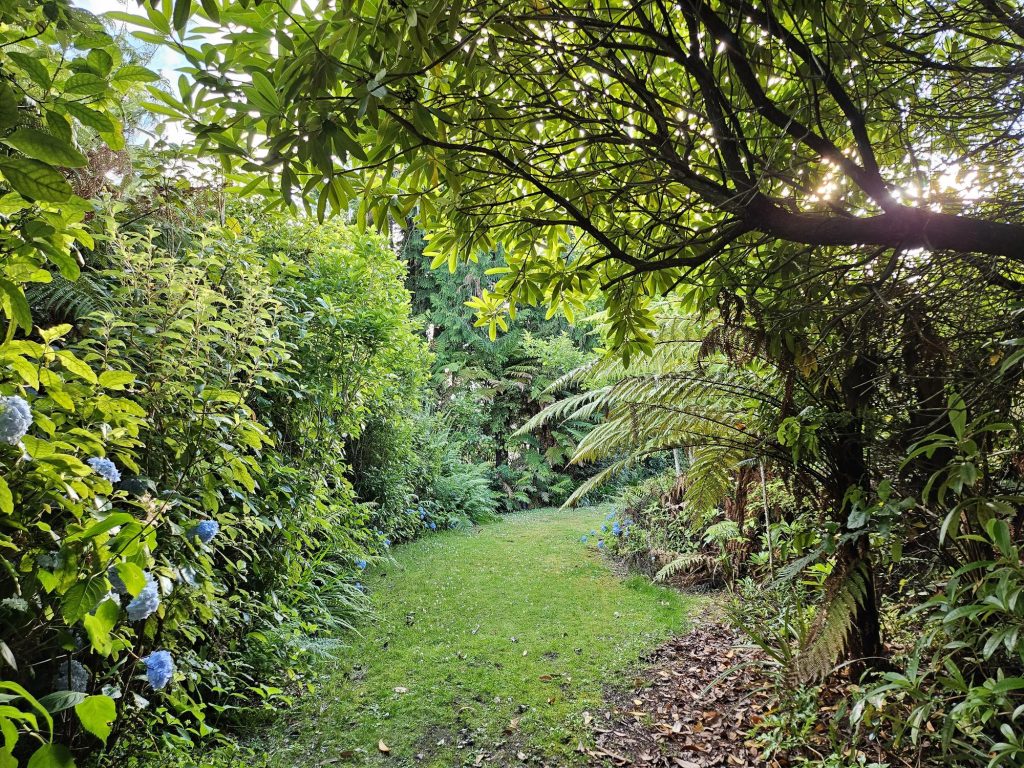
Prompt: If your life were a garden, what would it look like? What is thriving, struggling, or needs tending? What seeds are you planting this season? What habits will you start, hopes to nurture, and thoughts to refrain from?
If my life were a garden right now, it would be covered in lots of greenery, weeds, and foliage that is turning brown to represent what is dying off and leaving me. I feel great remorse for those dying leaves, but I also wait patiently for them to finish the cycle, drop, and be cleared away from what is developing. I caress each brown leaf with sadness and gratitude for what they gave me in my journey: the sustenance they provided and the way they stood tall, holding me up with strength and beauty even when I didn’t realize it. My hands turn sticky with the remnants of what was as I say goodbye to the dying leaves and stalks, and I am reminded that change is messy. I no longer need to wash the mess from my hands but rather sit in it, observe it, and remember that it’s OK to feel the disorder and remorse of a goodbye that I never knew I needed. I find myself thanking the old leaves for their help, efforts, and beauty of what once was, and I am grateful. I am mourning the loss, but I am grateful, and it’s OK to feel both.
I brush aside the brown leaves to reveal little seedlings growing proudly with hope and desire for what they can become, given the chance. I don’t even know when half of the tiny plants were grown from seed, and I’m surprised to recognize the journey of their commencement when I think about it. How did they start? Where did they come from? Did I set them into growth with my own actions, or did luck and chance allow them to sprout? I find that an answer is not required, and I will accept them with gratitude and thanks that they’ve sprouted, regardless of why. They represent creativity, peace of mind, depth of character, a slower and more fulfilling life, and, most importantly, the ability to see myself as a whole even when I feel less than.
I look ahead to the coming season of growth and foliage with hope and the desire to feel better and more in control of a life that has served loss on a silver platter over the past seasons, and it makes me smile. How a simple smile can offer comfort after a long and treacherous journey comes as a surprise, but I accept it with open arms because it offers me comfort, calm, and a quiet, resilient strength that I never knew I possessed. Saying you are strong and living a life of true strength are worlds apart from each other, and the concept is not lost on me.
In tending my garden, I will continue to tend to my mind, heart, and body the best that I can. I will learn, fail, and grow again with every new experience, and when I fail, I will brush aside the brown, sticky leaves of those times to embrace the opportunity of reflection and learning until my eyes can glance over yet another sweet pea plant that I am allowed to hold and embrace. I realize that there are endless ways for my tiny seeds of hope to grow as long as I never give up and continue to nourish, hold, and guide them (me) on a new and different path. With that, I wonder—is my garden ever failing, or is it, as I suspect, changing when I give it space?
The upcoming season brings planting, watering, and guiding new ideas, new hopes, and, most importantly, new acceptance. The more that I lean into accepting where I’m at and making peace with the parts of my garden that have gone on to compost, the better my understanding of who I am and what my ever-growing garden is capable of moving forward. I will continue to dream, to sow those dreams, and to enjoy the fruits of my labour with an open mind. My dreams can always be a reality, and if they fail, I will consider it a learning opportunity. So, if I plant the same dream, it can be modified with better care and attention for a different outcome, but I will not call it a failure. Like a farmer with crops that fail one year but then plants the same hearty corn the next, I will replant the seeds that matter most to me and move on from those that no longer serve my garden well.
My life is a garden, and I get to choose what to do with it in every moment, every season, and every decision about what to grow or allow to die off. I know that my ability to let go of the past needs tending to, and I will try. Nothing more—only try—and give myself the grace I need to do so for as many moments of time and effort as I require. I am the farmer. I am the gardener, and I am the beautiful human in charge of my growth and destiny. Let me say farewell to the old me and “bonjour” to the newer and more peaceful me. Let me continue to feed and water my developing heart of acceptance and open freedom so that the tiny shoots of learning and seedlings of quiet acceptance continue to grow. Let me open my hands to the things that don’t grow and give them space to just be. No judgment. No sadness. No feelings of actual failure, but rather an open space of warm soil, sunshine, and all of the water and kindness needed for the next steps of my planting season.
I deserve nothing less, and I will give myself and my garden another chance over and over. Despite pain and despite the sometimes poor growing conditions, I choose to believe and then believe some more. Just watch me.
Lianne Pettipas
About the Author: Lianne Pettipas is a creative dreamer that believes in kindness, laughter and living an authentic and vulnerable life. Years of suffering with mental and physical health have led her to work hard every day to accept others as they are, always choose kindness and to try to ‘live life despite pain’ (one of her favourite quotes.) A simple girl from Nova Scotia that enjoys a good cup of coffee, watching birds in the yard and the company and connection of her loving husband, three wonderful grown children and sweet, senior goldendoodle, Betty Boop.
Frustration is a common companion for those living with fibromyalgia. Plans change. Energy fluctuates. The body does not always cooperate. Over time, this can lead to a buildup of tension that feels difficult to release.
Creativity offers a way to transform that frustration into something meaningful.
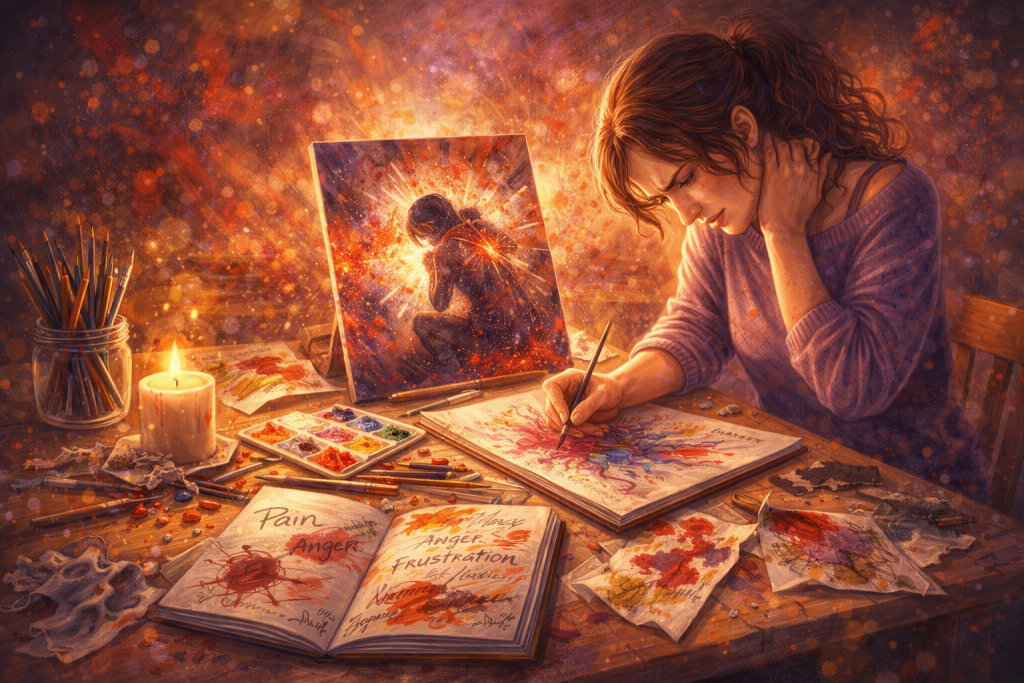
This transformation can be understood as a kind of creative alchemy—the process of turning difficult emotions into artistic expression. Instead of allowing frustration to remain internal and unresolved, it is given form.
A journal entry can capture the rawness of a difficult day. A painting can express what words cannot. Even simple, repetitive crafts can provide an outlet for restless energy.
The key is not to suppress frustration, but to work with it.
When you approach creativity in this way, you are not trying to create something polished or perfect. You are creating something honest. The value lies in the expression itself.
There is also a sense of release that comes with this process. Emotions that are expressed tend to lose some of their intensity. They move through rather than staying stuck.
At the same time, something new is created. What began as frustration becomes a poem, an image, or a piece of writing. This transformation can feel empowering. It demonstrates that even difficult experiences can give rise to something meaningful.
Creative alchemy also shifts perspective. Instead of viewing frustration solely as a negative experience, it becomes a source of material. It becomes something that can be shaped and understood.
This does not mean that frustration disappears. Fibromyalgia remains a complex and challenging condition. But creativity offers a way to relate to that frustration differently.
It becomes part of a larger process of expression and growth. And for fibromates, this is all important.
It is also important to approach this practice with kindness toward yourself. Some days, you may not feel like creating. That is okay. The goal is not consistency at all costs, but openness when the opportunity arises.
Even small acts of creation can be powerful. A few lines written in a moment of tension. A quick sketch. A simple craft. These acts matter.
Over time, they build a body of work that reflects not only your struggles, but also your resilience.
In turning frustration into art, you are doing more than coping. You are creating meaning.
And in that process, you may find that what once felt overwhelming becomes something you can hold, shape, and even, at times, transform into beauty.