
by Irene Roth /Blog Editor
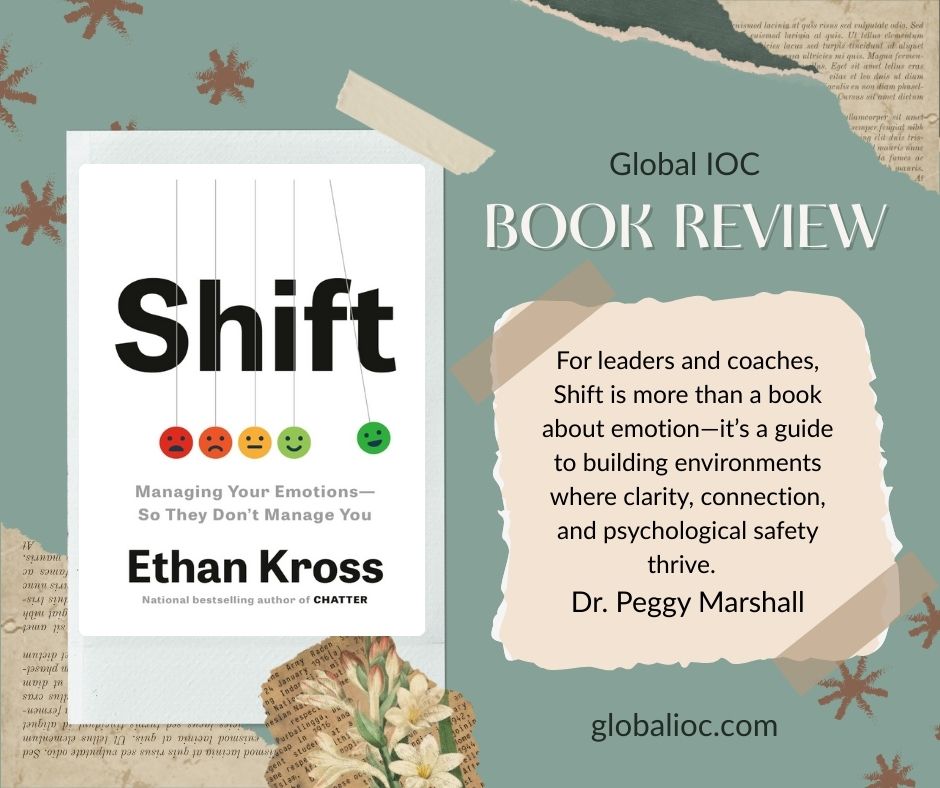
Ethan Kross’s Shift is the kind of book that feels like a steady hand on your shoulder. It doesn’t promise a life without pain, stress, or difficult emotions. Instead, it offers something far more realistic and empowering: practical ways to change your relationship to what you’re feeling in the moment. For fibro warriors—who often live with unpredictable symptoms, flare-ups, brain fog, sleep disruption, and the emotional whiplash that can come with chronic illness—this is deeply relevant.
Kross, a psychologist known for translating research into real-life tools, focuses on emotional regulation: how we can “shift” our inner experience when our thoughts and feelings start to spiral. That spiral is familiar in fibromyalgia. A pain spike can trigger anxiety (“What if this lasts for weeks?”), frustration (“Why can’t my body cooperate?”), or self-criticism (“I should be handling this better”). Shift reframes this as a human pattern rather than a personal failure, and then provides strategies to interrupt the loop.
One of the book’s most helpful contributions for fibro warriors is the emphasis on distance—not denial, not forced positivity, but a gentle step back from intense inner noise. When pain is loud, the mind often becomes louder. Kross’s tools encourage creating space between “I am in pain” and “I am ruined by pain.” That space matters because it can reduce the secondary suffering: the fear, shame, and catastrophizing that drain energy and amplify distress.
Kross also highlights the power of perspective-taking and supportive self-talk—not cheesy affirmations, but language that is grounded and compassionate. For someone with fibromyalgia, learning to speak to yourself the way you would speak to a friend can be life-changing. Instead of “I’m useless today,” the shift becomes “Today is a limited day. What’s one kind thing I can do for myself?” That’s not giving up; it’s wise pacing.
What I appreciated most is that Shift respects emotional struggle without making it the reader’s fault. The book doesn’t suggest that mindset cures illness. Rather, it shows how emotional tools can protect your nervous system from constant overload—something many fibro warriors are already trying to manage. When you’re living with chronic pain, even small reductions in stress reactivity can mean more usable energy, clearer thinking, and a greater sense of agency.
Overall, Shift is practical, compassionate, and empowering. For fibro warriors, it offers a toolkit for those moments when the body is doing what it does—and you still want a way to steady your mind, soften the edges of suffering, and keep your dignity intact. It’s not a cure. It’s a companion—and sometimes, that’s exactly what you need.