By Irene Roth/Blog Editor
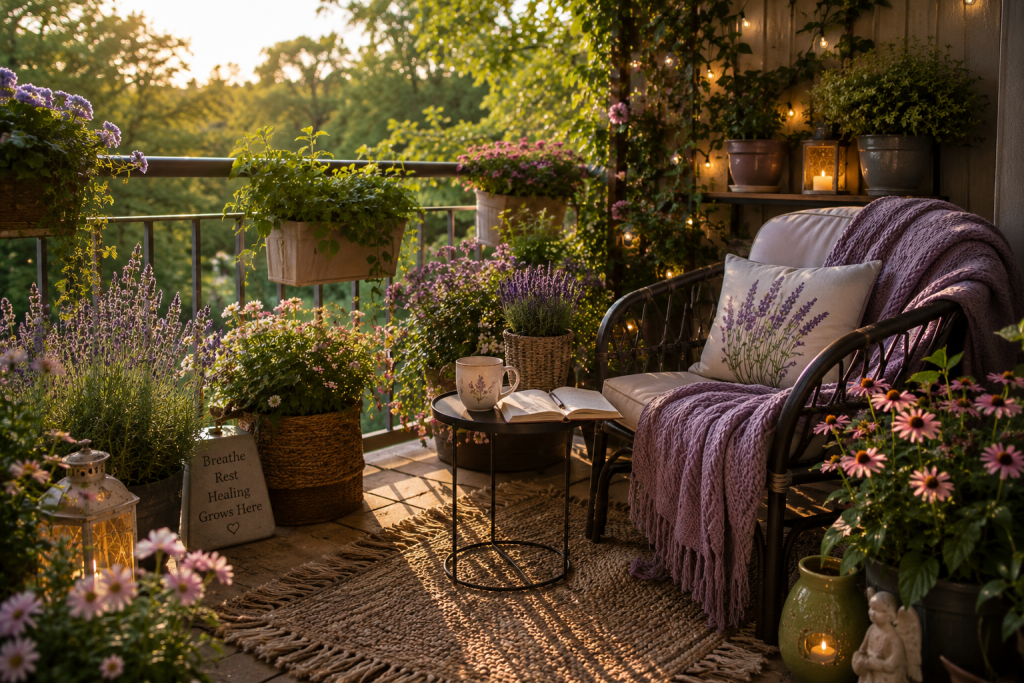
For many fibromates, home becomes more than simply a place to live. It becomes a place of recovery, comfort, and restoration. On difficult days, when pain, fatigue, or sensory overload make the world feel demanding, having a small outdoor refuge can offer surprising emotional and physical support. The good news is that a healing sanctuary does not require a large backyard or elaborate landscaping. Even a modest balcony, porch, patio, or sunny corner can become a gentle space for renewal.
A healing garden begins with comfort.
Fibromyalgia often heightens sensitivity, so creating a space that feels soothing to the nervous system matters. Start by considering seating. A supportive chair with soft cushions, a hammock chair, or a small bench with blankets can create a welcoming place to rest. Comfort invites us to linger rather than rush.
Shade and sunlight both deserve thoughtful attention.
Many fibromates appreciate gentle morning sunlight but may feel overwhelmed by intense afternoon heat. Consider adding an umbrella, pergola, or shaded corner while still allowing access to natural light. The goal is balance rather than exposure.
Plants can bring both beauty and emotional nourishment.
You do not need to be an experienced gardener to create something meaningful. Choose plants that feel calming and manageable rather than demanding. Lavender, mint, chamomile, rosemary, and lemon balm offer pleasant scents that many people find soothing. Purple flowers, soft grasses, and flowering herbs can create a peaceful visual rhythm.
Container gardens work beautifully for balconies and smaller spaces.
Raised planters or pots can also reduce bending and strain, helping conserve precious energy. A healing garden should support your body rather than exhaust it.
Think beyond plants.
A sanctuary engages the senses gently and intentionally. Wind chimes, bird feeders, small fountains, or smooth stones can add quiet sensory comfort. The sound of water or birdsong often creates a calming atmosphere that helps settle an overactive nervous system.
Texture matters too.
A soft throw, outdoor rug, or weatherproof cushions can make the space feel nurturing and personal. Some fibromates enjoy grounding by standing barefoot on grass or resting their feet on natural surfaces. Others simply appreciate feeling surrounded by natural textures.
Personal touches make the sanctuary uniquely yours.
You might include a favourite mug for tea, a small journal, inspirational stones, fairy lights, devotional items, or treasured garden ornaments. Healing spaces do not need to be perfect or expensive. They simply need to reflect peace and belonging.
Perhaps most importantly, release the pressure to create a picture-perfect garden.
Healing gardens are not competitions.
A single potted flower and comfortable chair can be enough. Fibromyalgia often teaches us to redefine success—not through productivity or perfection, but through gentleness and sustainability. Your sanctuary should feel supportive, not like another task on a long to-do list.
Gardens and balconies teach us something important.
Growth happens slowly.
Flowers bloom in their own time. Seeds rest before they rise. Nature reminds us that healing, too, is rarely hurried.
For fibromates, a healing garden or balcony sanctuary becomes more than an outdoor space. It becomes a quiet companion—a place to breathe, reflect, rest, and reconnect with ourselves.
Sometimes healing begins not with doing more, but with sitting quietly among growing things.