
Book Review: Awe is Everywhere for Everyone by Irene Roth

When I first began writing Awe Is Everywhere for Everyone, I thought I was simply writing about beauty and wonder. As the chapters unfolded, I realized I was also writing about survival—about the quiet ways we can remain connected to life even when our bodies make that connection feel difficult.

Living with fibromyalgia has taught me that life rarely unfolds according to our plans. Pain, fatigue, brain fog, and unpredictable flares can easily narrow our world until we begin to focus only on what we have lost. I know those moments well. There are days when simply getting through the day requires every ounce of energy I have. Yet even on those difficult days, I have discovered that awe has a remarkable way of finding me.

Awe Is Everywhere for Everyone is a gentle invitation to rediscover the extraordinary within the ordinary. In a world that often feels rushed, noisy, and overwhelming, this book reminds us that moments of wonder are never as far away as we imagine. Awe is not reserved for mountaintops, spectacular vacations, or once-in-a-lifetime experiences. It can be found in the gentle purring of my kitten curled beside me, the songs of birds from my balcony in the early morning, the scent of herbs growing in my garden, the resilience of flowers blooming despite the heat, or the comfort of sharing an honest conversation with someone who truly understands chronic illness.

As some of you know, I recently wrote about the healing power of noticing these small moments. They have become anchors for me. They do not erase the pain, but they gently remind me that pain is not the whole story. Every time I pause to appreciate the light filtering through the trees, the quiet rhythm of rain against the window, or the laughter of a loved one, I experience a subtle shift. My world becomes just a little larger than my symptoms.

Throughout this book, I share thoughtful reflections, practical exercises, and gentle invitations to help cultivate awe in everyday life. The practices are intentionally simple because I know that many of us have limited energy. They are designed to fit into real lives—especially lives affected by chronic illness. Whether it is taking one mindful breath, noticing a beautiful cloud, recalling a cherished memory, or listening closely to the sounds of nature, these small acts can help reduce stress, deepen gratitude, strengthen emotional resilience, and nurture a greater sense of connection to ourselves, others, and the world around us.

If you are living with fibromyalgia or another chronic condition, I hope this book feels like a companion rather than another list of things you “should” do. There is no pressure to create awe. There is only an invitation to notice it when it quietly appears. My hope is that these pages encourage you to slow down, breathe deeply, and discover that even on the hardest days, life still holds moments of quiet beauty waiting to be received.

Awe is not something we have to chase or earn. It is something we can gently choose to notice. And when we do, even the smallest moments can begin to transform how we experience our lives. I truly believe that awe is everywhere—for everyone—including every one of us living with fibromyalgia.

Standing in Your Power While Living with Limitations

by Irene Roth/Blog Editor

Living with fibromyalgia means living with limitations—but it does not mean living without power.

That distinction is important.

Our culture often tells us that power comes from achievement, productivity, physical strength, or the ability to keep pushing forward no matter the cost. When chronic illness changes what we can do, it is easy to believe that we have somehow become less powerful.

Nothing could be further from the truth.

Real power begins with knowing yourself. It is found in understanding your body’s rhythms, recognizing your limits, and making decisions that reflect your values instead of someone else’s expectations. While fibromyalgia may place limits on your energy, it cannot diminish your character, your wisdom, or your capacity to live with purpose.

Standing in your power means refusing to let your diagnosis define your identity.

Yes, fibromyalgia affects your daily life. It may influence how you work, socialize, travel, or spend your time. But it is only one part of your story. You are still the person who loves deeply, thinks creatively, laughs wholeheartedly, and dreams about the future.

You are so much more than your symptoms.

Living with limitations also teaches discernment. You become intentional about where you invest your precious energy. Instead of trying to do everything, you begin choosing what truly matters. You may say no more often, not because you are giving up, but because you are protecting your health and making space for what brings meaning and joy.

There is tremendous strength in that choice.

Standing in your power also means releasing the need to prove yourself. You do not have to justify why you need to rest. You do not have to apologize for cancelling plans during a flare. You do not have to earn compassion by pushing yourself beyond your limits.

Your experience is real, even if others cannot see it.

One of the greatest lessons fibromyalgia can teach is that worth is not measured by productivity. Some days your greatest accomplishment may simply be getting out of bed, preparing a meal, or taking a shower. Those victories count. They reflect perseverance, resilience, and determination in ways that many people will never fully understand.

Power also grows through self-compassion. Rather than criticizing yourself for what you cannot do, you begin celebrating what you can. You notice the small victories: completing a short walk, sharing a meaningful conversation, creating something beautiful, or finding moments of peace despite the pain.

These moments remind you that life is still rich with possibility.

Standing in your power is not about pretending that fibromyalgia is easy. It is about facing each day with honesty and courage. It is about adapting rather than surrendering. It is about believing that a meaningful life can still be built, even when the path looks different than you once imagined.

Your limitations may shape how you live, but they do not determine your value.

Every time you honour your body’s needs, establish healthy boundaries, ask for support, or choose rest without guilt, you are exercising your power. Every time you refuse to measure yourself by impossible standards, you reclaim another piece of yourself.

Your strength does not come from having no limitations.

It comes from continuing to live with hope, grace, and authenticity despite them.

That is a quiet kind of power—and perhaps the most enduring kind of all.

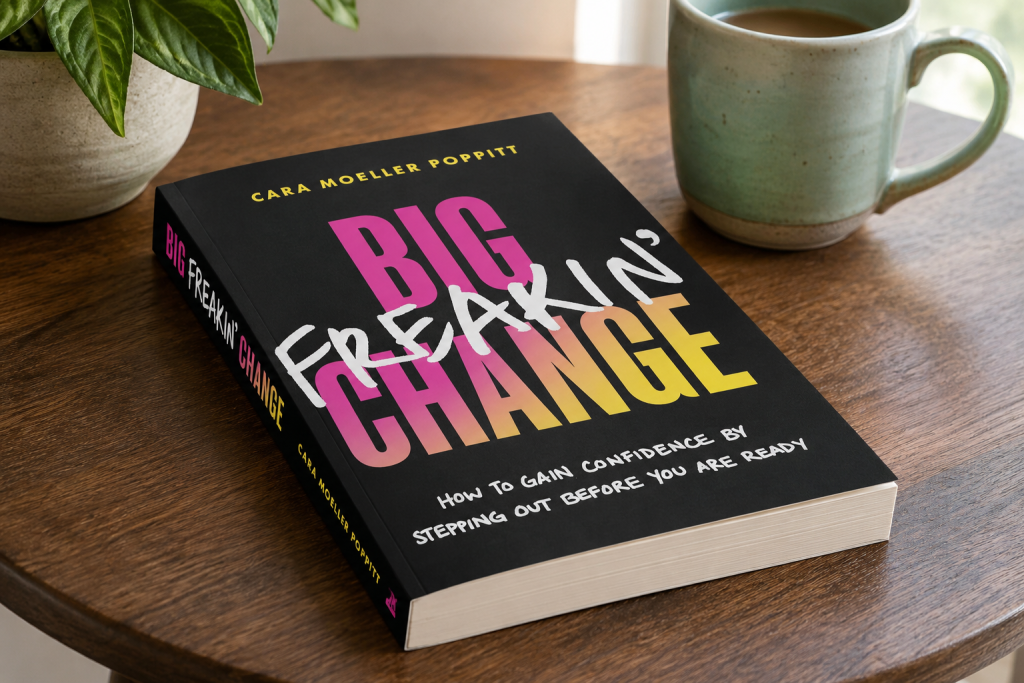
Book Review: Big Freakin’ Change by Cara Moeller Poppitt

by Irene Roth/Blog Editor

What if confidence isn’t something you wait to feel—but something you build by taking action?

That is the central premise of Big Freakin’ Change: How to Gain Confidence by Stepping Out Before You Are Ready, an encouraging and practical self-help guide by entrepreneur, speaker, and coach Cara Moeller Poppitt. Drawing on years of experience coaching thousands of women, Poppitt argues that the biggest obstacle to change is not a lack of ability but the mistaken belief that we must feel fully prepared before we begin. Instead, she suggests that confidence grows through action rather than preceding it.

One of the book’s greatest strengths is its accessibility. Poppitt writes in a conversational, encouraging style that feels more like an uplifting coaching session than a traditional self-help manual. Rather than overwhelming readers with psychological theory, she offers practical exercises, reflective questions, affirmations, and step-by-step strategies designed to help readers move beyond fear, perfectionism, and self-doubt. Her “Get Unstuck Cycle of Change” provides a clear framework for recognizing limiting beliefs, developing courage, and taking meaningful action.

Throughout the book, personal stories and examples from clients illustrate the emotional challenges that often accompany major life transitions. Whether the goal is changing careers, starting a business, improving relationships, or pursuing long-postponed dreams, these real-life examples remind readers that uncertainty is a normal part of growth. The author’s optimism is infectious, encouraging readers to see setbacks as opportunities for learning rather than evidence of failure.

One particularly valuable message is the book’s challenge to perfectionism. Many people postpone meaningful changes while waiting for the “right time,” believing they need more knowledge, experience, or confidence before acting. Poppitt effectively dismantles this belief by demonstrating that readiness is often created through movement itself. This perspective is both empowering and liberating for readers who feel trapped by indecision.

The book will particularly resonate with women navigating career changes, personal reinvention, or life transitions. Poppitt recognizes the unique pressures many women face, including self-doubt, fear of judgment, and the tendency to place others’ needs before their own. Her compassionate tone validates these experiences while encouraging readers to reclaim their own ambitions and trust their abilities.

At times, however, the book leans heavily on familiar motivational concepts. Readers well-versed in personal development literature may recognize recurring themes such as embracing fear, adopting a growth mindset, and replacing limiting beliefs with empowering ones. Some affirmations and mindset shifts can occasionally feel overly simplistic for individuals facing complex life circumstances. Critics have also noted that the book’s consistently upbeat tone may not fully acknowledge the structural or personal barriers that can complicate significant change.

Despite these limitations, Big Freakin’ Change succeeds because of its warmth, practicality, and genuine encouragement. Rather than promising overnight transformation, it reminds readers that courage develops gradually, one decision at a time. Poppitt’s message is both hopeful and actionable: waiting to feel ready often keeps us stuck, while taking imperfect action builds the very confidence we seek.

For readers looking for a supportive guide to overcoming fear and embracing life’s next chapter, this book offers both inspiration and practical direction. It serves as a timely reminder that meaningful change rarely begins with certainty—it begins with the willingness to take the first step.

Living with fibromyalgia often requires ongoing adaptation. Symptoms can change from day to day, making it necessary to continually adjust routines, expectations, and goals. Big Freakin’ Change encourages readers to move forward despite uncertainty—a message that resonates deeply with fibromates. While chronic pain may make large changes feel overwhelming, the book emphasizes taking small, manageable steps rather than waiting for the “perfect” moment. Its focus on overcoming self-doubt, releasing perfectionism, and building confidence through action aligns well with the realities of living with a chronic illness. For fibromates learning to redesign their lives around fluctuating energy and changing abilities, this book offers gentle encouragement to embrace growth, resilience, and possibility, one small step at a time.